Robotics Surgeries
- Home
- Robotics Surgeries
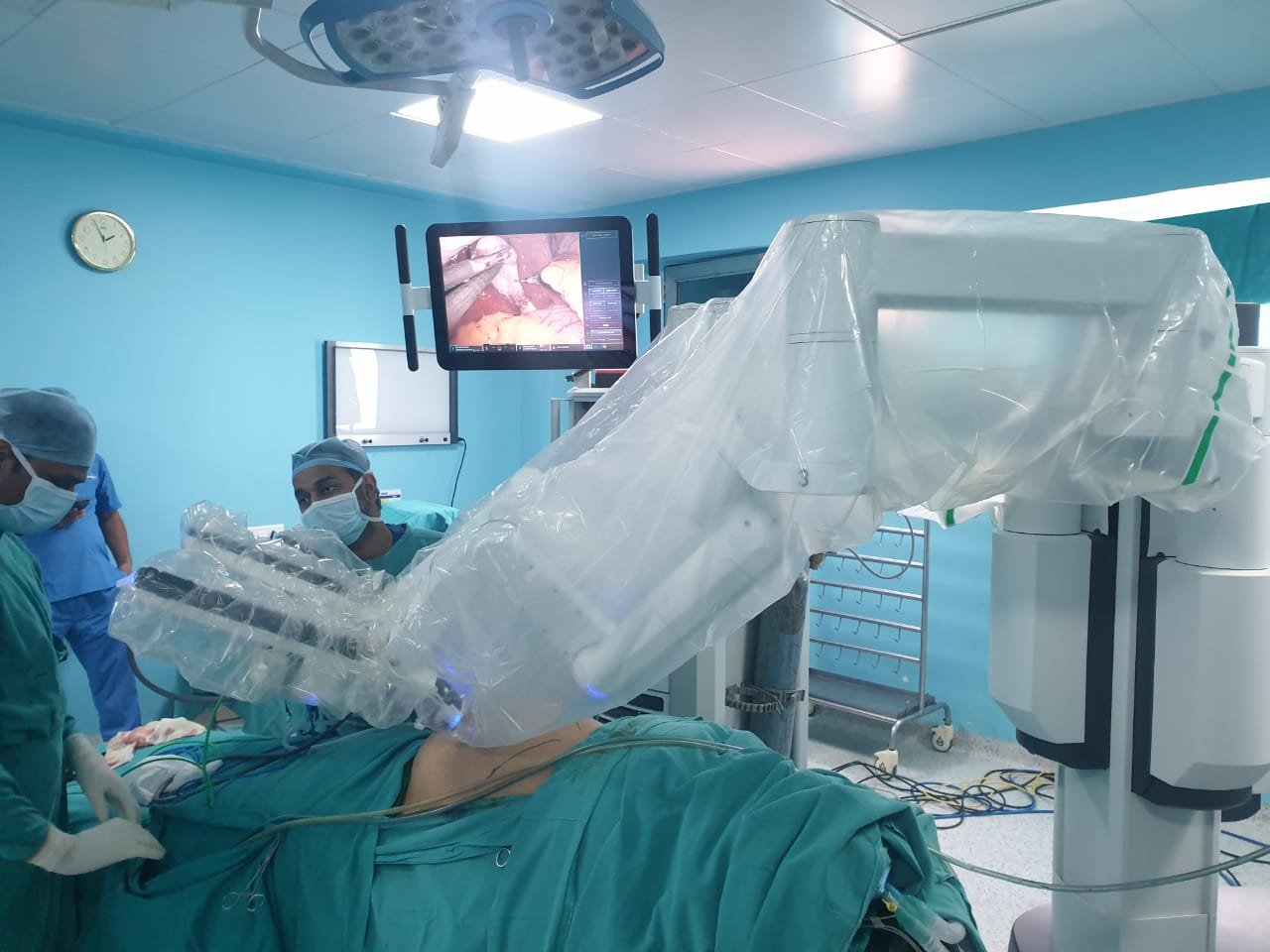
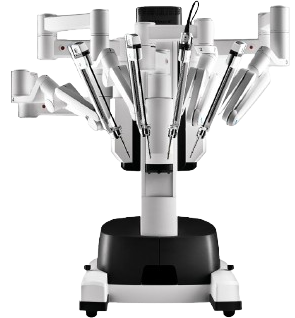
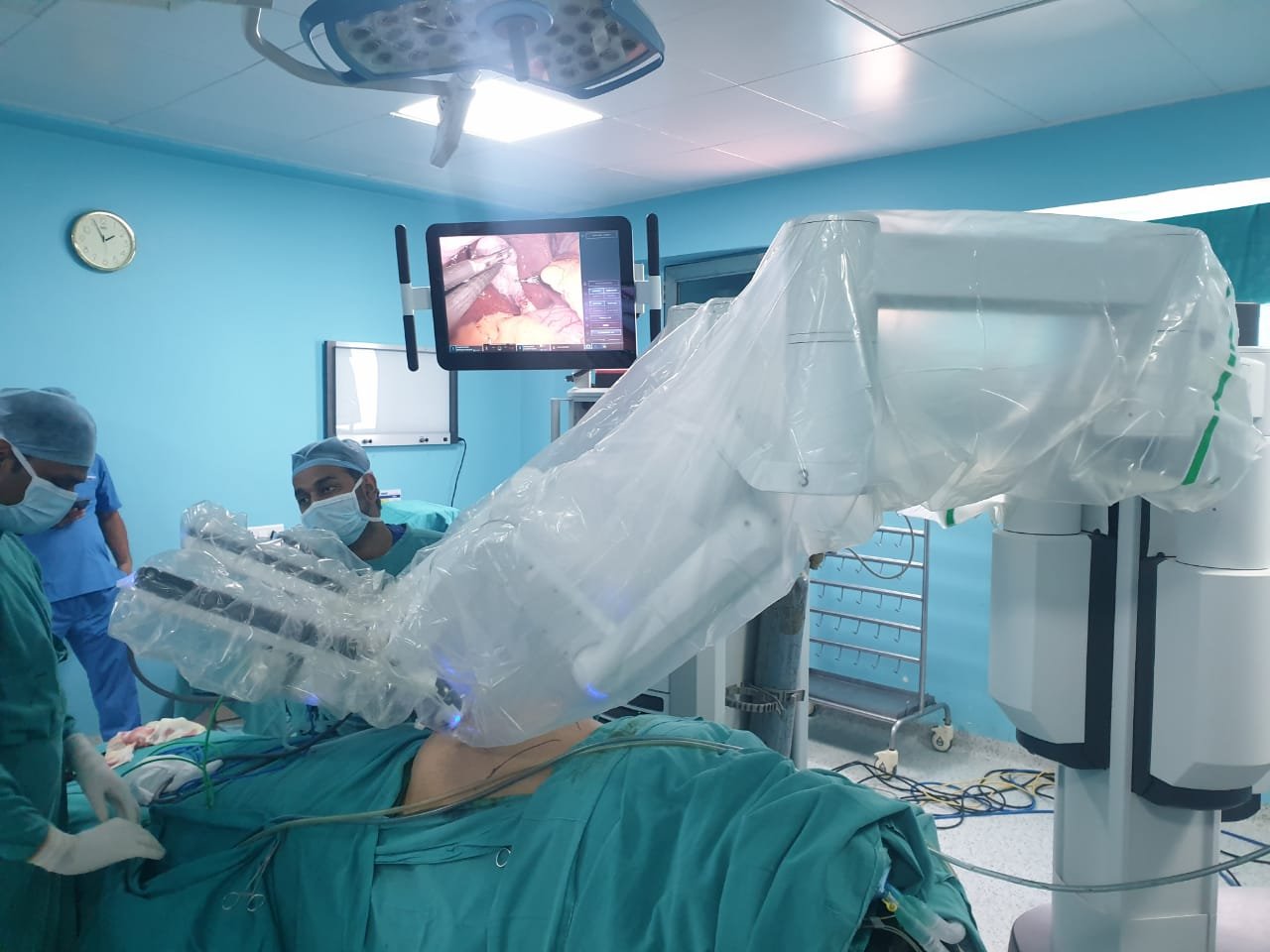
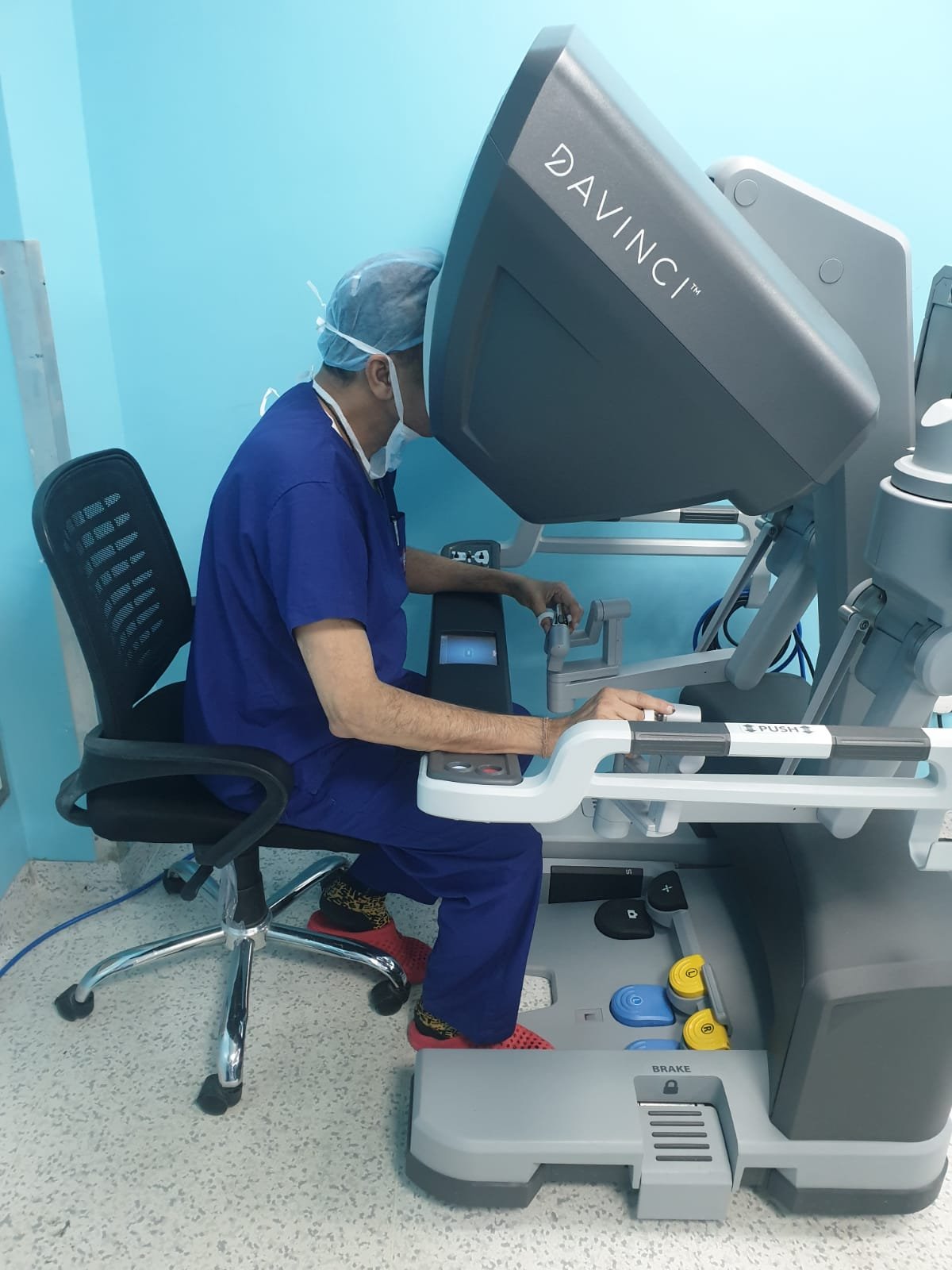
Robotic surgeries are known for their precision, faster patient recovery, low complications, low blood loss, and less post-operative pain. A 3D image with high magnification and resolution is visible to the surgeon. It helps the surgeon see the treatment area. The doctor can work their way by using the console. Robotic laparoscopy is the future of surgery. It can mimic complex movements with precision and has dexterity akin to human hand. We use Da Vinci X robot to perform surgeries like gall bladder stone removal, appendix, hernias, uterus, cancer surgeries etc.
Treatments
- Gall bladder stone removal
- Hernia repair
- Appendix removal
- Bariatric surgery (weight reduction)
- Surgery of uterus and ovaries
- Cancer Surgeries
FAQ's
Robot assisted surgery is a surgical technique wherein there is a robot controlled by a
distantly connected console. The doctor manages the console which enables the robot to
mimic their hand movements and perform surgical procedures.
Robotic surgery has numerous advantages like high precision, minimal scarring, minimally
invasive, reduced errors, remote operation, improved dexterity, reduced risk of infection
and improved surgical outcomes.
Laparoscopic surgery is guided by a camera and the expert performs the procedure on the
patient. However, a robotic surgery is performed from a distance with the console being
controlled by the expert to perform the surgical operation.
The cost of equipment and maintenance is higher for robotic surgery compared to
laparoscopic surgery. However, the cost is overcome by the ease of surgery for patients
and doctors. The loss of working hours is minimal.
Yes, robotic surgery is safe. With minimal contact and high precision, it is a minimally
invasive procedure. It ensures fewer complications in post-operative care.
Recovery times vary based on the type of surgery, but generally, patients experience
faster recovery with robotic surgery compared to traditional open surgery and laparoscopic
surgery. Many patients are able to return to normal activities within a day.
Most patients report almost no pain after robotic surgery and minimal trauma to
surrounding tissues.
We perform thorough tests before giving a nod for robotic surgery. Your current health
status, complexity of the surgery and medical history are taken into account before
proceeding.
Robotic surgery can be used for a variety of procedures across specialties such as
urology, gynecology, general surgery, thoracic surgery, orthopedics, and ENT. Consult with
our surgeons to learn about your options.
No surgery, be it any technique, is risk free. While robotic surgery is generally safe, it
still carries some risks common to all surgeries, such as infection, bleeding, and
anesthesia complications. Additionally, if the robotic system malfunctions, the surgeon
can switch to traditional methods to complete the procedure.